
Short answer
Apply for the length that matches the trips you genuinely expect to make. If you are planning one visit, a 6-month visa will be sufficient.
If you expect to visit the UK regularly over several years, a 2, 5 or 10-year visa may be more convenient and could save money.
However, a longer visa is not automatically the better choice. You should consider your travel plans, personal circumstances, previous travel history and whether you can explain why you need a visa of that length.
How much does each UK visit visa length cost?
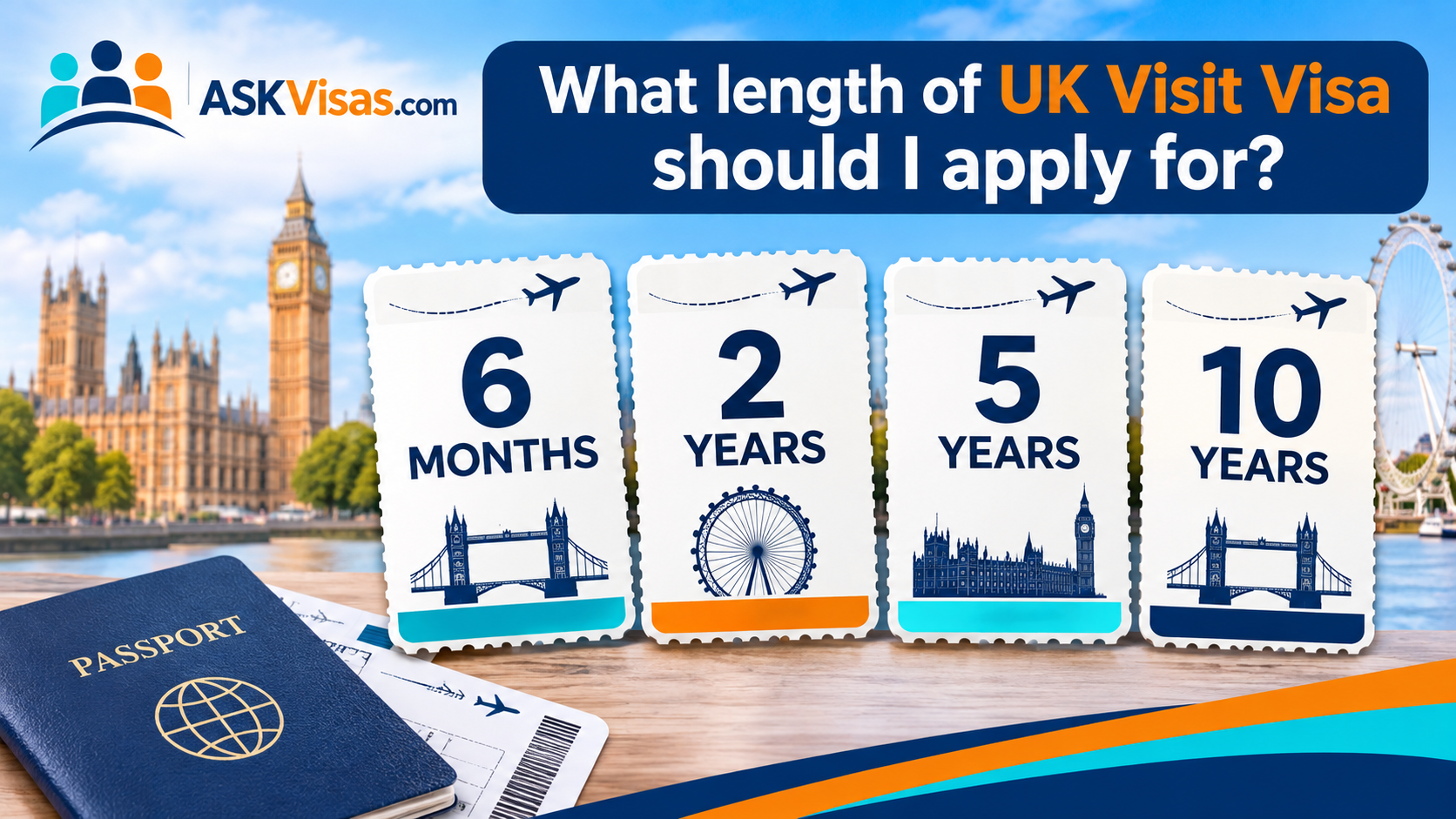
The Standard Visitor visa has four available lengths. These are the current application fees as at 16 November 2026:
- 6 months: £135
- 2 years: £506
- 5 years: £903
- 10 years: £1,128
Fees as of November 2026
Long-term visas allow multiple visits, but each stay is still limited to 6 months.
How do I decide which visa length to apply for?
Think about how often you realistically expect to visit the UK.
Here are some points to consider:
- 6 months: Usually the sensible option if you are planning a one-off holiday, visiting friends or relatives, or are unsure whether you will return.
- 2 years: May suit someone who expects to make several visits over the next couple of years, perhaps to see relatives, attend regular events or visit the UK for business activities permitted under the Visitor rules.
- 5 years: Could be appropriate if you have an established reason for returning regularly and expect this pattern to continue over several years.
- 10 years: Generally worth considering when you have, ongoing reason for frequent or regular visits over a longer period.
You should be able to explain why you expect to visit repeatedly and why the requested visa length makes sense for your circumstances.
For example, someone with close relatives in the UK who expects to visit several times each year may have a clearer reason for requesting a long-term visa than someone planning an occasional holiday.
There is no requirement to have visited the UK previously before applying for a longer visa. However, if you have little or no travel history, you may need to rely more heavily on other evidence to demonstrate that you are a genuine visitor.
What does the Home Office look at when deciding?
The Home Office has specific guidance for its visa decision makers on long-term Standard Visitor visas.
It recognises that applicants can request 2, 5 or 10-year visas, but the decision maker must still be satisfied that the applicant meets the Visitor requirements.
In particular, the Home Office considers:
- Your travel history: Previous visits to the UK and other countries, including whether you complied with their immigration rules.
- Your personal circumstances: Your employment, family situation, financial position and commitments where you live.
- Your reasons for visiting: Whether your reasons for wanting to visit the UK regularly are credible and consistent with your circumstances.
- Your finances: Whether you can afford your proposed visits without relying on prohibited activities or circumstances that are inconsistent with being a genuine visitor.
- Your intention to leave: Whether you genuinely intend to return to your country of residence rather than use repeated visits to live in the UK.
Importantly, the Home Office's own guidance says that travel history should not be the only consideration. First-time travellers can still qualify, but decision makers will need to consider other evidence when assessing their intentions.
If you meet the requirements for a visit but the decision maker has concerns about granting a long-term visa, you may receive a shorter visa than you requested.
There is no refund of the difference in fees.
Does a longer visa change the immigration rules?
No.
A 10-year Standard Visitor visa does not give you permission to live in the UK for 10 years. Nor does it give you additional rights compared with someone holding a 6-month visa.
The same Visitor requirements continue to apply throughout the validity of the visa:
- Each visit is normally limited to a maximum of 6 months.
- You must continue to undertake activities permitted under the Standard Visitor route.
- You cannot use repeated visits to make the UK your main home.
- You must continue to meet the requirements of a genuine visitor and intend to leave at the end of each visit.
Can my reason for visiting change during a long-term visa?
Yes. The Home Office recognises that the main reason for visiting can change over the course of a 2, 5 or 10-year visa.
For example, you might initially apply because you want to visit relatives, but later make visits for tourism, shopping or other permitted activities.
This is acceptable provided your activities remain within the Standard Visitor rules and you continue to meet the relevant requirements.
When does a longer visa save money?
The longer visas have higher upfront fees, but they can work out cheaper if you make enough separate applications for 6-month visas.
Using the current £135 fee for a 6-month visa:
- A 2-year visa costs less than four separate 6-month applications.
- A 5-year visa costs less than seven separate 6-month applications.
- A 10-year visa costs less than nine separate 6-month applications.
These are simple fee comparisons, not guarantees of savings. Your actual savings depend on how often you travel and how many separate applications you would otherwise need.
If you only visit occasionally, paying for a longer visa may not make financial sense. Consider the likely number of visits as well as the convenience of not having to apply again.
Can a first-time applicant ask for a 5 or 10-year visa?
Yes. You do not have to have held a UK visit visa before, or have an established UK travel history, to request a longer visa.
However, you should have a clear and credible reason for requesting it.
For a first-time applicant, the decision maker may need to rely more heavily on evidence of personal circumstances, employment, finances, family commitments and the reasons for expecting regular visits.
A longer visa is not guaranteed simply because you can afford the application fee or have relatives in the UK.
The decision maker must be satisfied that you meet the requirements for the duration requested. If there are concerns, UKVI may grant a shorter visa instead.
Remember that the full application fee is retained even if a shorter visa is issued.
Official UK guidance
The Home Office publishes detailed guidance for its decision makers on how to assess Standard Visitor applications, including applications for long-term visas.
Two particularly relevant sources are:
- GOV.UK: Apply for a Standard Visitor visa – explains the available visa lengths, fees and conditions.
- Home Office: Visit caseworker guidance – explains how decision makers assess long-term visas, genuine visitors and frequent or successive visits.
You can also read the Immigration Rules: Appendix V – Visitor, which sets out the formal requirements of the Visitor route.
Guidance checked: 16 November 2026.
Frequently asked questions
Can I stay 10 years in the UK on a 10-year visit visa?
No. The visa is valid for 10 years, but each visit is normally limited to 6 months.
Do I get a refund if I receive a shorter visa?
No. If UKVI grants a shorter visa than you requested, you will not receive a refund of the difference in application fees.
Does a long-term visa guarantee entry every time?
No. You must still meet the Visitor requirements each time you travel. Border Force officers can ask questions about your visit and may refuse entry or cancel your permission if they have grounds to do so.
Can I visit the UK several times a year?
Yes, provided your visits are genuine and you do not use repeated visits to live in the UK. There is no fixed 6-month-in-12-month rule, but your overall travel pattern will be considered.
Can I use a 10-year visa for different types of visits?
Yes. Your reasons for visiting can change over time, provided each visit is for an activity permitted under the Standard Visitor rules.
Questions about which visa length is right for your circumstances?
Message ASKVisas on WhatsApp. We can help you understand the options and consider which application may be appropriate.